
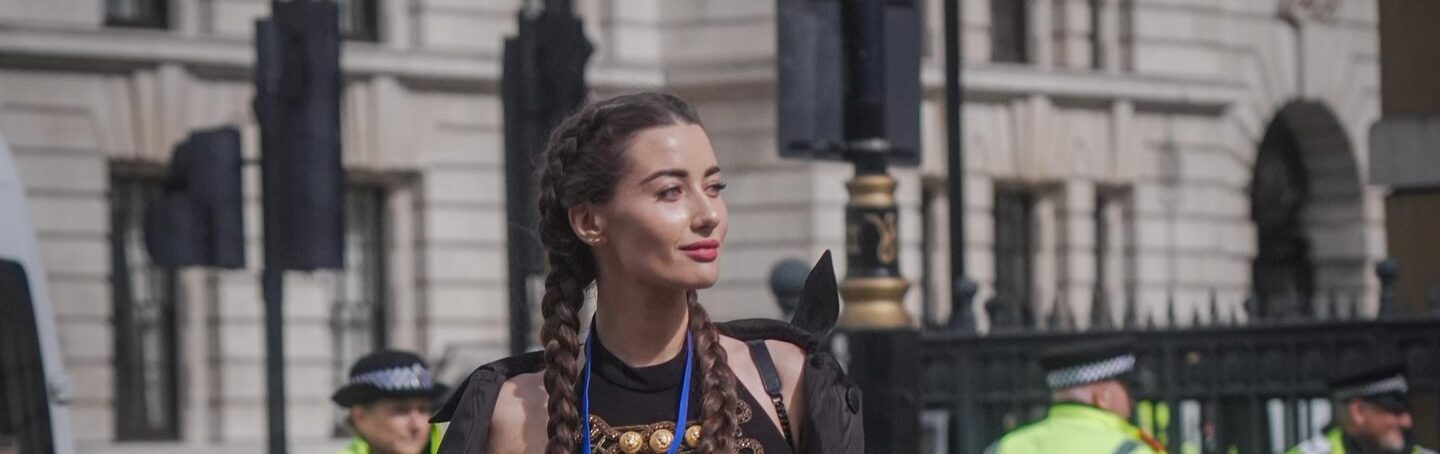
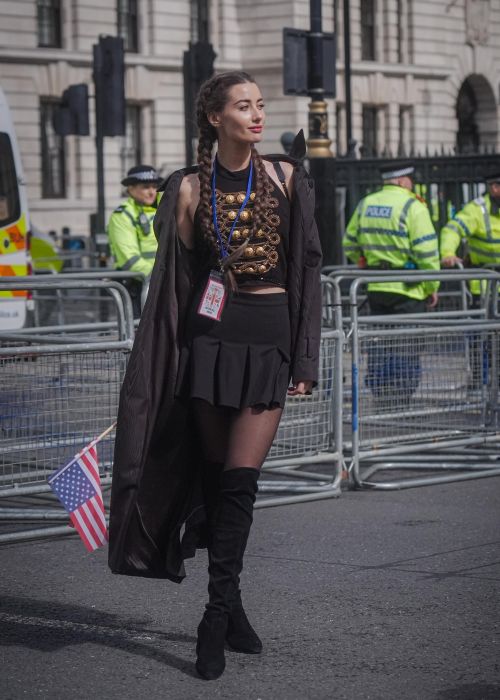

Jade Warwick has the kind of resume Hollywood claims to love: theater actress since age four, classical Shakespeare training, opera vocals, modeling contracts in Europe and Australia, film credits across genres. But the very traits that made her stand out—namely discipline, femininity, and a stubborn sense of personal truth—eventually branded her a persona non grata within an industry increasingly obsessed with ideological performance.
Though she now lives in America, Warwick was born and raised in Wales, where she trained as a child actor and performed in London and Cardiff. She grew up practicing ballet, waltz, jazz, and Shakespeare monologues––with no room for error.
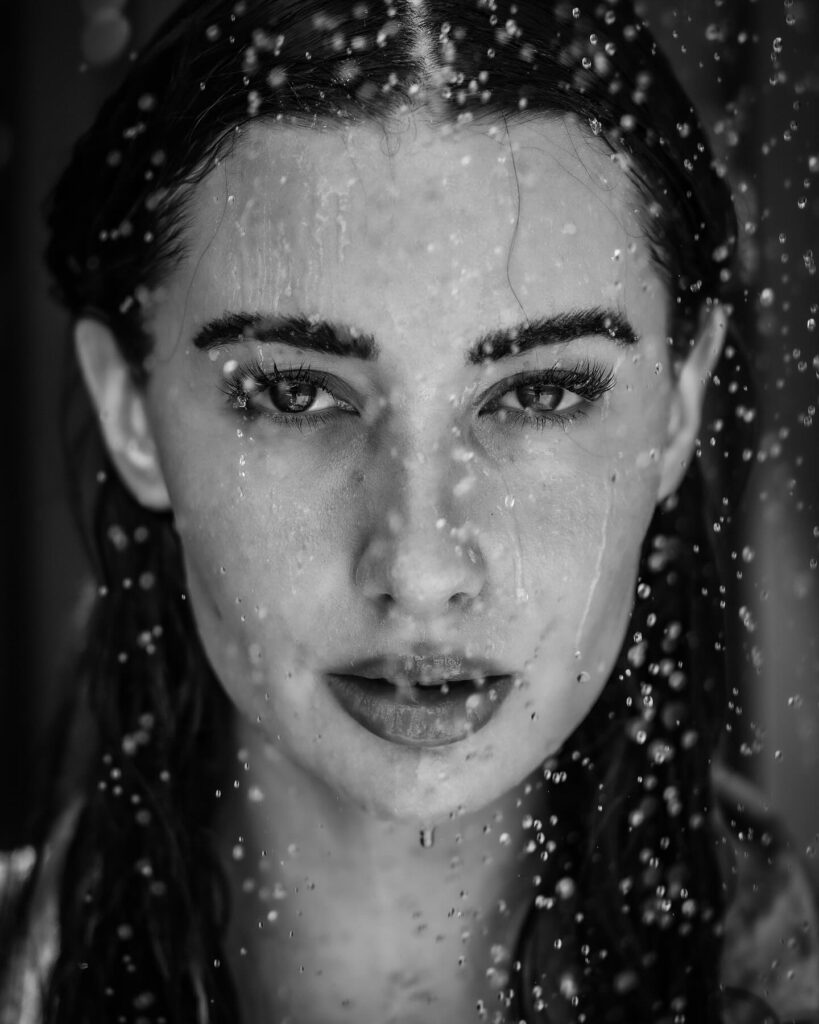
“I loved the pressure. On stage, you don’t get a second take,” she told IW Features. “I worked really well under that.”
Warwick eventually took on a modeling career. By 18 years old, she had signed in Milan, Paris, Rome, and Amsterdam. Eventually, Warwick landed in Los Angeles, where her trajectory took a turn.
Indeed, Warwick hadn’t been in Hollywood long when the pressure began. Her agency allegedly told her she needed a different identity––one they could market. They proposed labeling her as queer, pairing her with LGBTQ-identifying models for shoots, cutting her hair, and styling her as a “lesbian rock star.” They told her that her natural look was too classically feminine, too “white presenting,” and therefore less castable, Warwick recalled.
In hindsight, Warwick said she remembered looking at them and thinking, “Does the truth not matter at all?”
“I felt like I was lying to everyone,” she admitted. “I’d go to set and introduce myself as a bisexual queen. And it wasn’t true.”
After a few months of pretending, the guilt began weighing heavily on her. Eventually, she told the agency she wanted to look like herself again. They dropped her loudly, and––she suspects––not legally.
This was her first taste of Hollywood’s unwritten rule: you can be anything here, as long as it fits our narrative.

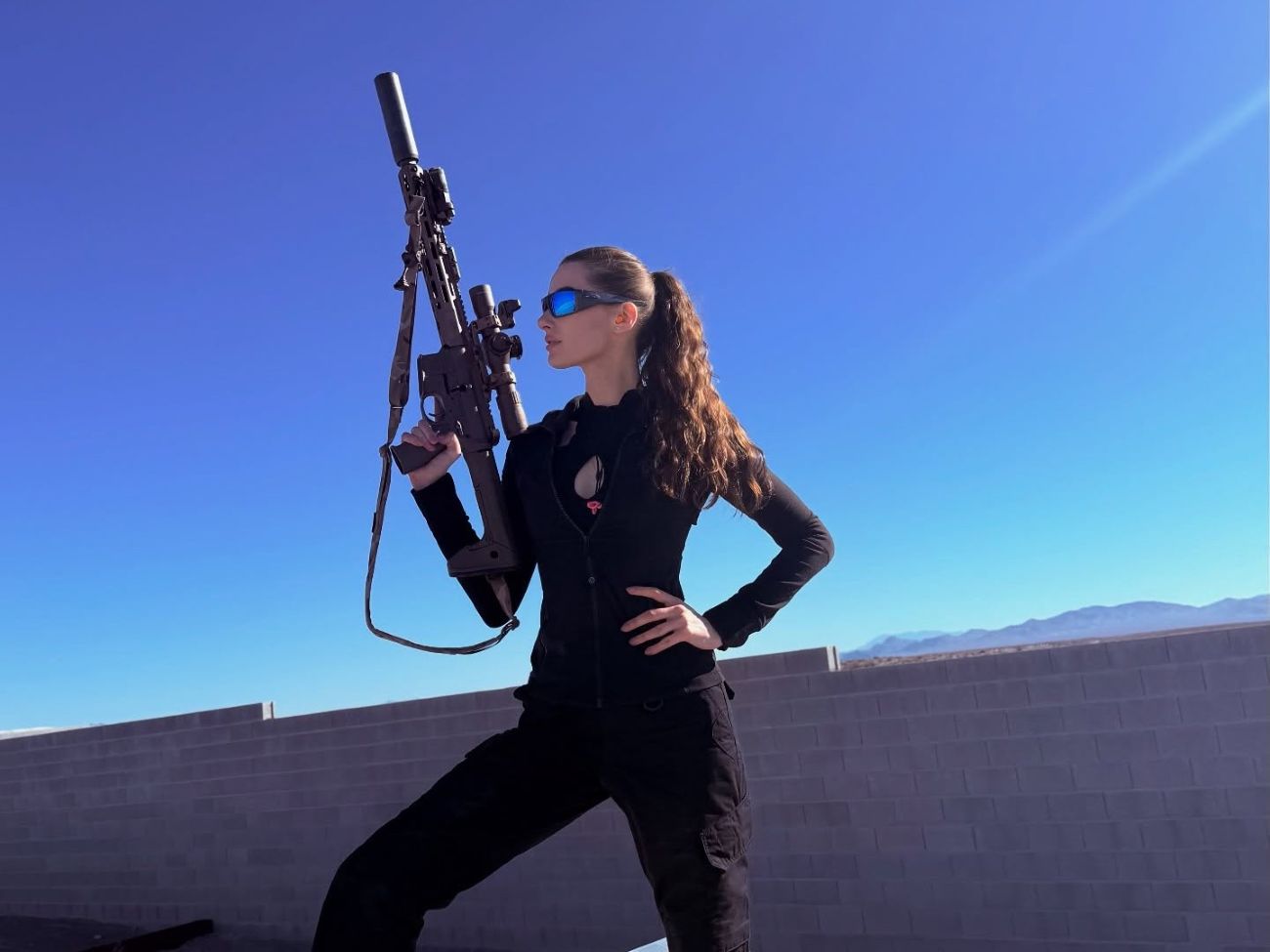
Despite losing modeling work, Warwick then discovered something she didn’t expect: silence in Hollywood is often just fear.
“Pretty much every set I was on, we all thought similarly. You just couldn’t say it,” she said.
Crews would wait until after filming wrapped, head to drinks, and finally speak freely once the doors closed, she alleged. And if anyone in the room looked ready to report a wrong opinion, the conversation stayed dead quiet.
That dynamic––a politically diverse crew, all pretending to hold the same progressive worldview––is one of Hollywood’s worst-kept secrets. In her industry, compelled speech may not come with the contract, but it’s implied and enforced as though it were. Entertainment industry professionals are asked by their agencies to introduce themselves with certain labels, to state pronouns before stepping on set, to post a certain message if they want to keep working––and threatened that silence on the issue du jour is violence.
So, some models, singers, and actors comply to protect their livelihoods. Others do it because they believe the messaging. But for people like Warwick, who were asked to adopt a “queer” facade and change their appearance, the effect of maintaining the facade was psychological erosion.
“I’d go home feeling guilty for receiving paychecks,” she said. “It messes with your mind. Anxiety, depression… it takes a toll.”
This ecosystem of compelled speech has also had a corrosive effect on Hollywood itself. When actors are selected to fill demographic checkboxes rather than their talents, the craft becomes diluted. Art suffers when scripts become messaging vehicles, and audiences feel it.
But dissent is dangerous. Speaking up, even politely, or refusing to comment on a social issue risks blacklisting and online mobbing.
And Warwick’s refusal to keep her head down forced her into the open. Within a six-month period, she booked just one modeling job. Film roles had increased for her, however, especially with directors tired of working within the ideological echo chamber.
Still, Warwick said she realizes the situation could have been much worse. Warwick admitted she struggled with her identity at one point, even thinking she might be a boy because she preferred male roles and wasn’t always comfortable being feminine.
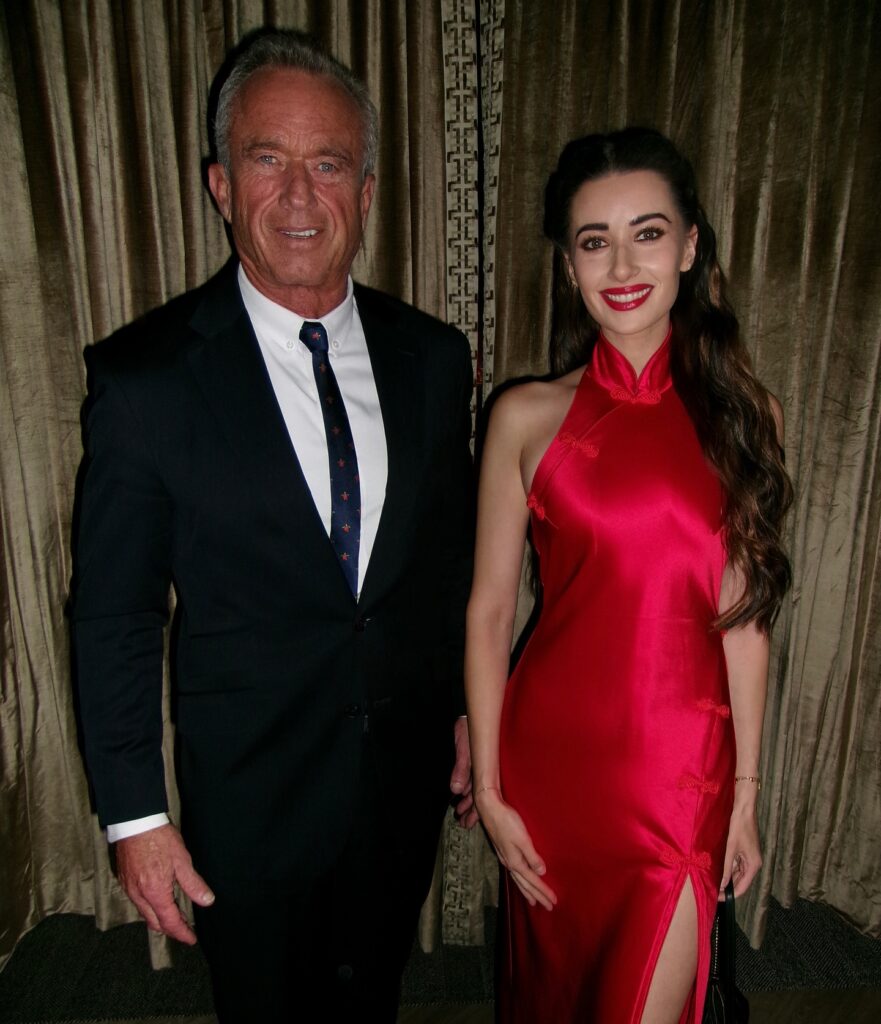
“If I were growing up now,” she said, the adults around her “probably would’ve put me on transitioning medication. That’s actually scary to think about.”
But puberty arrived for Warwick like a switch flipping. She discovered waistlines, softness, and curves. Warwick credits her mother––a lifelong fashion designer––and her grandmother in helping her find her own style. Audrey Hepburn became her north star.
That aesthetic––elegant and classical––is exactly what Warwick’s Los Angeles agency attempted to strip from her. But for Warwick, femininity wasn’t a costume on set, it was her nature as a woman.
And even though she’s lost work since speaking openly about her beliefs, Warwick hasn’t lost hope.
“I always felt like things would work out. Whether it’s my faith or lunacy,” she said with a laugh, “I knew I’d be okay. And if I had to change careers, I was fine with that.”
Warwick admitted her end goals aren’t industry awards. Rather, she’d like to lean into a career path more political in nature. Today, Warwick is an online political commentator with over 300,000 followers on Instagram, where she posts short-form videos addressing current events.
She joked, but only halfway, about wanting to serve as Ambassador to the United Kingdom. Her “perfect world” dream? Prime Minister.
As for the entertainment industry, Warwick’s hopes and dreams are blunt.
“I hope they stop isolating half the country. They act like extremists––if you don’t agree with everything they say, they cancel you. We’re supposed to disagree. Debate is how we grow,” she said.
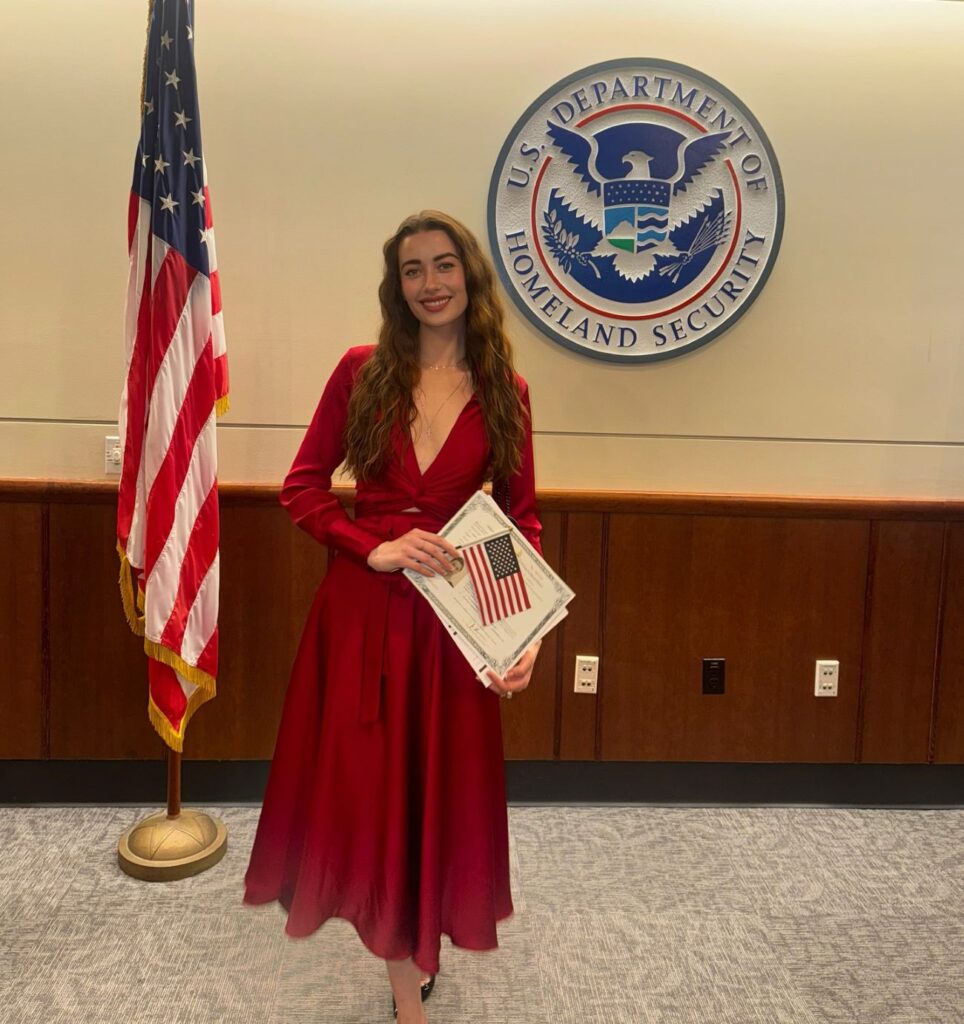
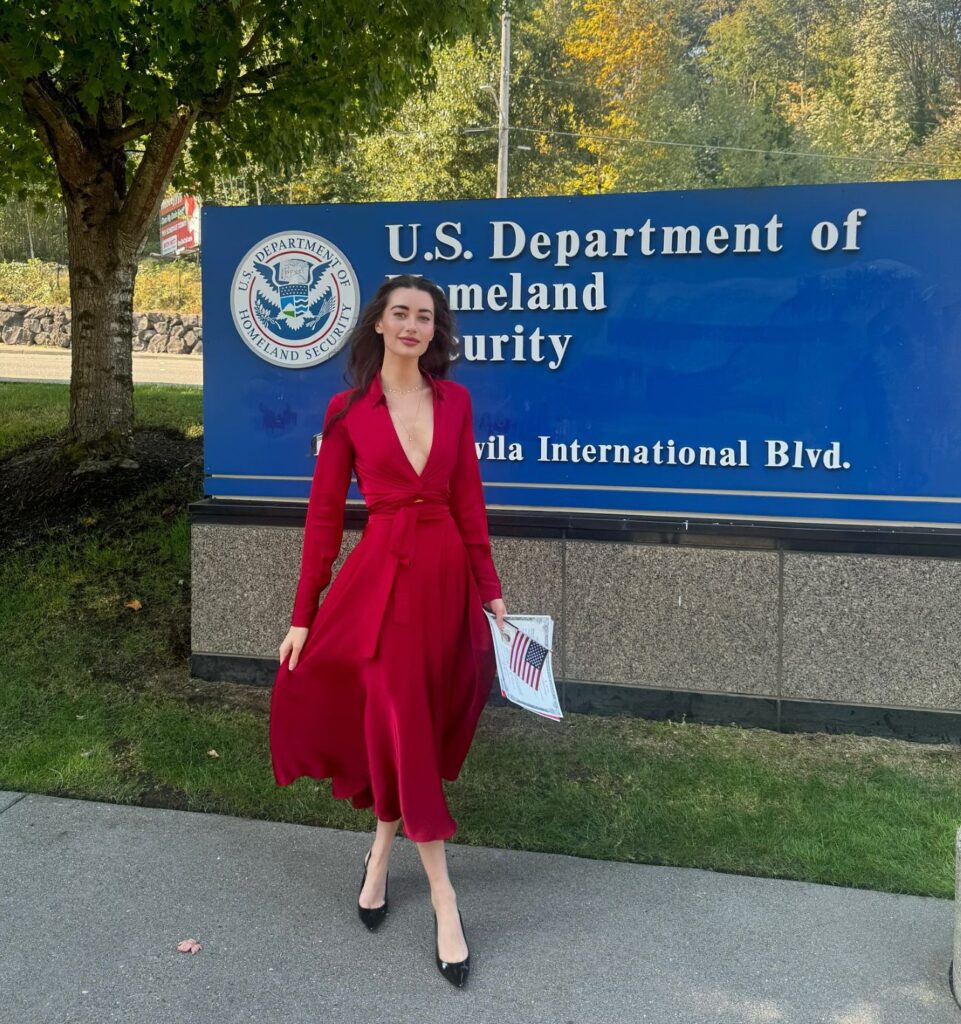
Warwick’s critique about Hollywood isn’t that there needs to be more outwardly conservative art, but that art needs to be produced with honesty. She expressed a desire for a Hollywood where you don’t have to sort films into “ours” and “theirs”; where a blockbuster can be something Americans can all watch together, instead of new releases serving as another ideological litmus test.
That’s the kind of Hollywood she grew up loving: Audrey Hepburn, Hitchcock, and classical storytelling that didn’t need a political label stamped onto every script. It simply needed the freedoms art relies on to survive.